British Airways 2018: The Supplier Password That Opened the Booking Website
Between 22 June and 5 September 2018, an attacker was inside British Airways' network — and BA did not know. Entry took one supplier employee's password, used through BA's remote-access gateway with no multi-factor authentication. From there the attacker escaped the limited remote-access area, found a privileged administrator password stored in plain text where any user in the domain could read it, reached card details that a testing feature had been logging in plain text since December 2015, and finally edited the booking website itself so a copy of customers' card details flowed to an attacker-controlled site for 15 days while bookings completed normally. The UK regulator's final figure: the attacker was in a position to access the personal data of 429,612 people. This is the documented story, from the Information Commissioner's penalty notice of 16 October 2020.
The short answer
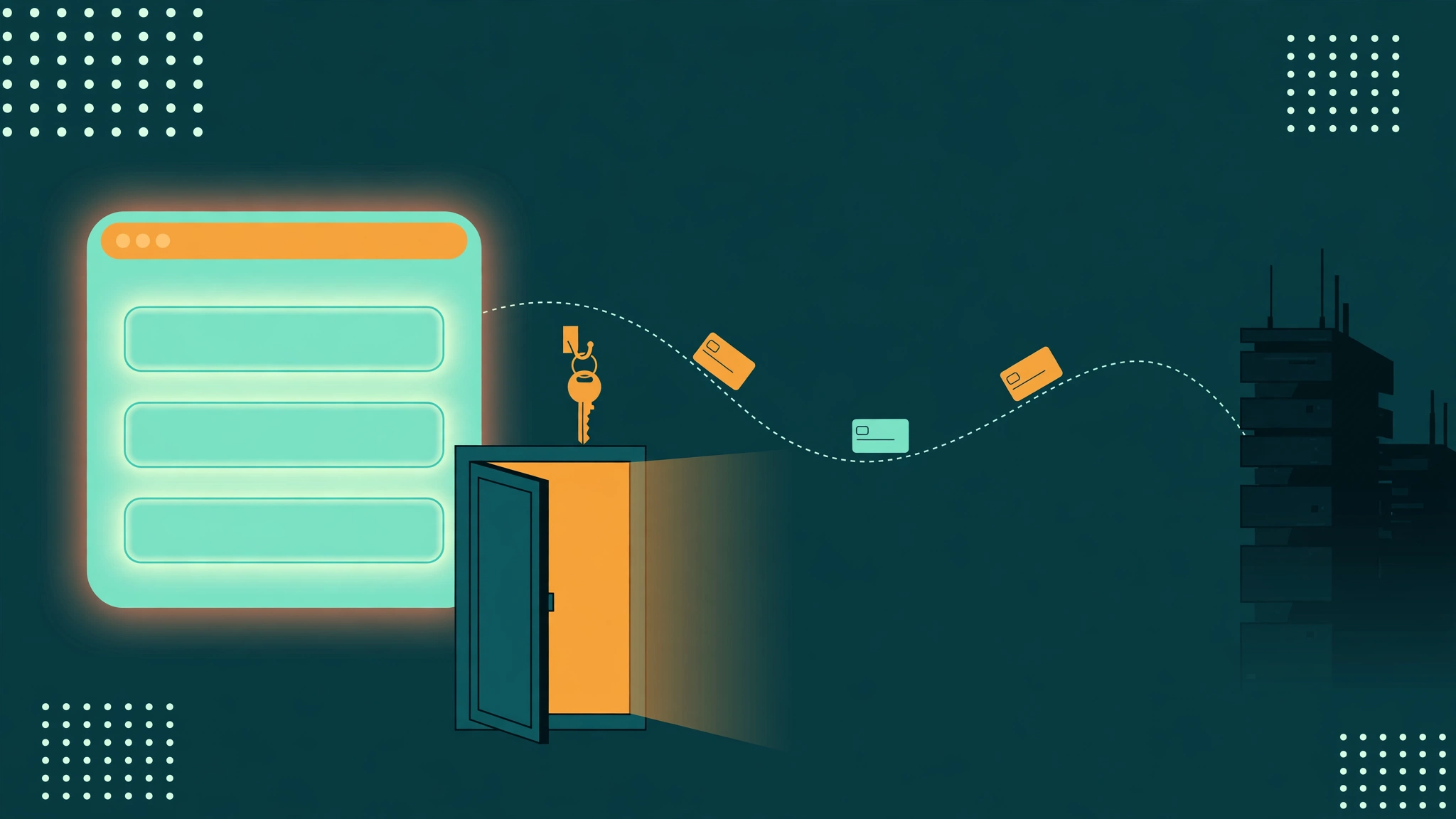
Between 22 June and 5 September 2018, an unidentified attacker — called "the Attacker" throughout the regulator's notice — had access to the internal network of British Airways (BA). The way in was not a broken firewall or a zero-day exploit. It was the compromised login credentials of an employee of Swissport, a third-party cargo-services supplier, used to sign in through BA's Citrix Access Gateway — the tool BA used to let people reach internal applications remotely. That account was protected by a username and password alone: there was no multi-factor authentication (MFA), the extra proof (usually a code on a phone) that stops a stolen password from being enough on its own. Once inside, the attacker broke out of the limited remote-access area, found the username and password of a highly privileged administrator account stored in plain text in a file any user in the domain could open, and used that freedom to explore the network for weeks. On 26 July 2018 the attacker reached log files containing payment card details in plain text — a testing feature that had been left switched on in the live system since December 2015 had been recording them, covering about 108,000 cards. Finally, the attacker edited code on BA's booking website so that, for 15 days (21 August to 5 September 2018), a copy of the card details customers typed in was sent to an attacker-controlled site, BAways.com, while their bookings completed normally. BA learned of the breach from a third party on 5 September, contained the malicious code within about 90 minutes, and notified the regulator and customers the next day. The UK Information Commissioner (ICO) found breaches of the General Data Protection Regulation (GDPR) and, on 16 October 2020, imposed a penalty of £20 million. BA did not admit liability; the Commissioner's findings are the record this page follows.
The company: what British Airways did
British Airways is one of the United Kingdom's best-known airlines. In the words of the penalty notice, BA is a subsidiary of International Airlines Group, which is registered in Spain but has its operational headquarters in the United Kingdom. The customers affected by this breach were in the United Kingdom, in the European Union, and in the rest of the world.
Why BA's computers matter to a data-protection regulator is simple: an airline booking is a bundle of personal data. To sell a ticket, BA collects and stores (the notice uses the GDPR word processing for this) each customer's name, address and payment card details, and it decides how and why that data is used — which made BA the controller of that data under the GDPR, legally responsible for keeping it secure. The GDPR itself had only just come into force, on 25 May 2018 — weeks before the attacker arrived. This case became one of the first major tests of what "appropriate security" means under the new law, decided against a company that processed, in the Commissioner's words, a significant amount of personal data.
One more piece of context the notice is careful about: BA did not run everything itself. Like most large companies, it gave third-party suppliers limited remote access to specific internal applications so they could do their contracted work. Swissport, which provided cargo services to BA, was one of those suppliers. That ordinary, necessary arrangement — supplier access, granted for a narrow job — is where this story starts.
The problem: a narrow door, left wider than anyone thought
No single mistake caused this breach. The notice describes a chain of gaps, each of which made the next one easier. Understanding the chain matters more than any one link, so here it is before the timeline.
First, the door check was weaker than BA's own rulebook. BA's Network Access Control Policy of 7 October 2017 stated that multi-factor authentication "shall be incorporated for all remote network access (both user and administrator, and including third-party access for support or maintenance) originating from outside the network." Yet the Citrix gateway hosted 243 applications, and 13 of them were not protected by MFA. The Commissioner found that BA had not provided a satisfactory explanation for why this access sat outside the policy, and noted that alternatives existed if MFA was genuinely impractical — restricting access to known external IP addresses (an IP whitelist: only listed addresses may connect), or an IPSec VPN (a private, encrypted tunnel between known sites). None of those alternatives was in place either.
Second, the room behind the door was not sealed. A supplier signing in through Citrix was supposed to reach only a carefully limited set of applications. In practice, the attacker was able to "break out" of the Citrix environment into BA's wider network. Breakout from Citrix was not a new or secret risk: the Commissioner points to published guidance, including from Citrix itself, identifying it as a known security issue with known countermeasures. BA itself never conclusively established exactly how the breakout was done — the notice says so plainly, and parts of its technical detail are redacted — but the fact of the breakout is not in dispute.
Third, the keys to the building were written down where anyone could read them. During reconnaissance (mapping out the network from inside), the attacker found a file containing the username and password of a privileged domain administrator account, stored in plain text in a folder that, in theory, any user within the relevant domain could open. A domain administrator account is among the most powerful accounts in a Windows network — the notice calls it one that grants "amongst the most privileged access of any user account." Whoever holds those credentials can roam almost at will, which is why the Commissioner stresses that monitoring such accounts is a vital part of security.
Fourth, nobody was watching closely enough to notice. The attacker was present from 22 June to 5 September — and the Commissioner records that it is unclear whether or when BA would ever have detected the breach on its own. The failures the notice identifies include inadequate logging and monitoring (the records a system keeps of who did what, and the process of actually reviewing them) and the absence of file integrity monitoring — a control that watches important files, such as website code, and alerts when they change without authorisation. When the attacker later edited the booking website's code, nothing inside BA raised the alarm.
Fifth, the system was quietly keeping card details it should never have kept. A card-logging feature built for testing — intended to operate only when the systems were not live — had been left activated when the systems went live, and had been storing payment card details in plain text since December 2015. BA explained this was human error; the notice is clear the logging served no business purpose. Only a 95-day log retention period limited how much had accumulated.
An analogy: imagine an office where a contractor's badge opens the side door with no second check, the side room's internal door turns out to be unlocked, the master key is written on a note in a shared drawer, the security cameras record to tapes nobody reviews — and, unknown to everyone, a photocopier in the corner has been keeping a plain copy of every payment card shown to it for over two years. No one failure is exotic. Stacked together, they are the breach.
What this shows: the attack as the ICO notice reconstructs it, in order — entry, breakout, privilege escalation, and then the two separate ways card data was exposed.
What happened: 22 June to 5 September 2018
All dates are as given in the penalty notice. Where the notice's technical detail is redacted or BA itself could not establish a step conclusively, this page says so rather than filling the gap.
What this shows: the full arc — about eleven weeks inside the network, fifteen days of live skimming, a fast containment once BA finally knew, and a two-year regulatory process afterwards.
22 June 2018 — Step 1: initial access. The attacker obtained login credentials BA had provided for an employee of Swissport, a third-party provider of cargo services, based in Trinidad and Tobago. BA was unable to determine how those credentials were compromised, but identified that five accounts connected to Swissport had been compromised in total. Using the compromised account, the attacker signed in through the Citrix Access Gateway (CAG) — BA's remote-access tool, which let authorised users reach internal applications as if they were in the office. The account was not protected by MFA. From that foothold, the attacker could reach the set of applications available to Swissport employees.
Step 2: breaking out of Citrix. The attacker then escaped the Citrix environment into parts of BA's network that Swissport employees were never intended to reach, copied tools in from outside, and began network reconnaissance. The notice records BA's competing hypotheses about the exact technique and states that BA has not been able to establish conclusively how the breakout was achieved. This page does not guess: what matters for the lessons is that the boundary that was supposed to contain a supplier account did not contain it.
Steps 3–6: privilege escalation. During reconnaissance, the attacker found the file containing the privileged domain administrator username and password in plain text, in a folder any user within the domain could open. That account gave the attacker virtually unrestricted access to the compromised domain. On 26 June 2018 — four days after entry — the attacker also obtained the credentials of a database System Administrator (the notice's detail here is redacted). The notice also records three failed login attempts using System Administrator credentials on 23 June, followed by successful logins to three servers on 25 June — early activity that proper monitoring of privileged accounts should have made visible.
26 July 2018 — Step 7: the plain-text logs. Moving between servers, the attacker reached log files containing, in plain text, payment card details from BA redemption transactions (bookings paid for with loyalty points, in whole or part). This was the testing feature left switched on: it had been logging card details — including, in most cases, the CVV (the three-digit security code on the back of the card) — since December 2015, with no business purpose. Because the logs were kept for 95 days, the details of approximately 108,000 payment cards were potentially available to the attacker.
August 2018 — Step 8: the skimmer. Searching BA's systems, the attacker found files containing code for the BA website. Between 14 and 25 August 2018, the attacker edited that code to copy and redirect customer payment card data to BAways.com, a site the attacker owned and controlled — a technique BA itself referred to as "skimming," after the devices criminals fit to cash machines. The malicious code was active for 15 days, from 21 August to 5 September 2018. When customers entered card details on BA's website, a copy went to the attacker — without interrupting the normal booking and payment procedure, so neither customers nor BA saw anything wrong.
What this shows: how a skimmer hides in plain sight — the genuine payment path keeps working perfectly, which is exactly why nobody notices the second, copied path until someone looks for it.
5 September 2018 — discovery, from outside. A third party informed BA that data was being sent from britishairways.com to BAways.com. Only then did the clock start inside BA — and, to its credit, it moved fast: within 90 minutes, BA had adapted the malicious code and contained the vulnerability, and 20 minutes later it blocked the URL paths to BAways.com. BA determined 5 September as the last known date of unauthorised access. Note the contrast the whole case turns on: seventy-five days of undetected presence, then a ninety-minute containment. The capability to respond was there. The detection was not.
The damage
The people affected. The Commissioner's final assessment is that the attacker was in a position to access the personal data of approximately 429,612 individuals. The breakdown matters, because the combinations carry different risks: about 244,000 customers had their name, address, card number and CVV exposed; about 77,000 had card number and CVV only; and about 108,000 had card number only — the plain-text redemption logs. Beyond customers, the attacker could also reach the usernames and passwords of BA employee and administrator accounts, and the usernames and PIN numbers of up to 612 BA Executive Club accounts (those passwords were changed and the accounts checked for fraudulent activity). Keep three different counts separate, because the record contains all three: BA notified 496,636 customers on 6 September and a further 39,480 on 7 September, working from what it knew at the time; the ICO's later, investigated figure for data the attacker was in a position to access is the 429,612 above.
The human cost the Commissioner weighed. The notice rejects BA's suggestion that distress was unlikely. Many of the 429,612 were, in the Commissioner's assessment, likely to have suffered anxiety and distress on learning their personal information — including payment details — was in the hands of an unknown criminal. One concrete measure: over 40,000 people took up BA's offer of free credit monitoring. The Commissioner also noted the risk could have been worse: the attacker appeared financially motivated, but the same access could have been used to target high-profile individuals or disrupt bookings.
The legal findings. The Commissioner found that, between the GDPR coming into force on 25 May 2018 and 5 September 2018, BA had breached Article 5(1)(f) (personal data must be processed with appropriate security) and Article 32 (controllers must implement appropriate technical and organisational security measures). The Commissioner characterised the failure as negligent, not intentional, and held BA wholly responsible for the security failures — the penalty punishes BA's inadequate defences, not the attacker's crime. For the penalty calculation, the infringement was treated as lasting 103 days, from 25 May to 5 September 2018, during which unauthorised access went undetected by BA.
The penalty path — read it carefully, because three numbers circulate. On 4 July 2019, the Commissioner's Notice of Intent proposed a penalty of £183.39 million. That figure was calculated using the published Regulatory Action Policy plus an unpublished draft internal procedure. After BA's representations, the Commissioner dropped the draft procedure and recalculated using the published policy alone: a £30 million starting point, reduced by 20 percent (£6 million) for mitigating factors — BA's prompt notification, cooperation, and steps to minimise damage — giving £24 million, then reduced by a further £4 million under the ICO's Covid-19 approach to financial hardship. The final penalty, dated 16 October 2020, was £20 million. For scale, BA's worldwide turnover for the year ended 31 December 2017 was £12,226,000,000 — the £20 million penalty is well under 1 percent of turnover, and well within the GDPR's cap. The headline lesson is not the discount; it is that a proposed nine-figure penalty and a final eight-figure one both came out of the same documented security failures.
How they recovered
Step one: contain, in about ninety minutes. Once the third party's warning arrived on 5 September 2018, BA adapted the malicious website code and contained the vulnerability within 90 minutes, then blocked the paths to BAways.com 20 minutes after that. Whatever else this case criticises, the incident response itself — once triggered — was fast.
Step two: tell everyone, the next day. On 6 September 2018, BA notified the Commissioner, its acquirer banks and the payment schemes, and the 496,636 affected customers it had identified, with 39,480 more notified on 7 September. The Commissioner expressly credited BA with acting promptly in notifying her and with cooperating fully with the investigation — cooperation that later counted as a mitigating factor in the penalty. BA also notified a long list of other bodies the notice records: the Financial Conduct Authority, the police, the Civil Aviation Authority, HMRC, the Department for Transport, the National Crime Agency, the National Cyber Security Centre, data-protection regulators outside the EEA, and 21 state attorneys general in the United States — and issued a press release to some 5,000 journalists and commentators.
Step three: make customers whole, as far as money goes. BA offered to reimburse all customers who suffered financial losses as a direct result of the theft of their card details (the offer was made on 7 September 2018 and maintained on its website) and made free credit monitoring available — the offer over 40,000 people accepted.
Step four: close the doors the attacker used. The notice records two concrete technical remedies by name. MFA was implemented on all remote access accounts — the control whose absence started the chain. And after 5 September 2018, BA implemented a next-generation anti-virus and endpoint detection and response tool, CrowdStrike Falcon; BA later confirmed to the Commissioner that its deployment was fully completed on 16 November 2018. The notice lists further remedial measures BA described, several of which are redacted in the published text, so this page names only the two the notice states openly. BA also told the Commissioner that its spending on IT security would not be reduced because of Covid-19.
The fix: technology and controls that came out of it
The penalty notice doubles as a checklist: every failure in Section 6 of the notice names a control that was available, published, and — in several cases — already BA's own stated policy. The fixes below are the Commissioner's, not hindsight invented for this page.
Multi-factor authentication on every remote-access path — no quiet exceptions. The single highest-value fix in the case. A stolen password alone should never open a network. The Commissioner is explicit that if MFA was impractical somewhere, equivalent barriers were expected instead: IP whitelisting or an IPSec VPN. What was not acceptable was a policy that said "all remote access" and an estate where 13 of 243 gateway applications quietly sat outside it. The control and the inventory of exceptions are the same job.
Treat supplier access as your own attack surface. This was, in the Commissioner's framing, a supply-chain attack: the credentials belonged to a supplier, but the risk landed on BA. Published guidance the notice cites — from the Centre for the Protection of National Infrastructure (2015) and the National Cyber Security Centre (2018) — tells organisations to manage supply-chain security as an extension of their own: risk-score the contracts, require proportionate security measures in them, audit compliance, and map the access each tier actually has. A supplier account must be limited to the minimum it needs (the principle of least privilege) and contained so that even a valid supplier login cannot become a network-wide one.
Harden the remote-access boundary against breakout. The Citrix environment was a waiting room that turned out to have an unlocked internal door. Citrix and its partners had published breakout guidance and hardening steps — including removing undesired Windows and Citrix functionality — well before 2018. The lesson generalises to every remote-access product: the gateway is not just a door, it is a room, and the room needs its own hardening, patching and testing, because attackers will try its walls first.
Never store privileged credentials where ordinary users can read them. A domain administrator password in a plain-text file, in a folder any domain user could open, converted a foothold into near-total control. Privileged credentials belong in a managed vault, with unique passwords per system, rotation, and — the Commissioner's specific emphasis — monitoring of privileged accounts as a vital control, so that unusual administrator logins (such as failed attempts followed by logins to multiple servers) raise an alarm in hours, not never.
Logging and monitoring that someone actually acts on. The notice calls logging the foundation on which security monitoring is built — and finds BA was not generating or reviewing logs to a sufficient level to detect an attacker present for over two months. Collecting logs is not monitoring. The fix is the full loop: log the events that matter (privileged logins, file changes, unusual outbound transfers), review them with tooling and people, and alert on the patterns this attack displayed in its first week.
File integrity monitoring on anything that touches payments. A change-detection control watching the booking website's code would have flagged the skimmer edit when it happened, instead of a third party finding it fifteen days later. The payment-card industry's own standard, PCI DSS, which the notice cites, requires exactly this: deploy a change-detection mechanism to alert personnel to unauthorised modification of critical files. Any file a customer pays through is a critical file.
Do not log what you must not keep — and hunt for test features in production. The plain-text card logs existed because a testing feature survived into the live system and nobody found it for over two and a half years. The controls are unglamorous: review logging code before go-live, search production systems for card data they should not hold, and treat "this only runs in test" as a claim to verify, not a comfort. BA's 95-day retention limit is the one part of that system that worked as a damage limiter — retention limits are a security control, not housekeeping.
What this means for you
Enterprise network engineers
This is your case, almost line for line. Your remote-access estate — VPN concentrators, Citrix or VDI gateways, supplier portals, jump hosts — is the modern office's side door, and BA shows how it fails: not by being smashed, but by being excepted. Audit the exceptions, not the policy. Count the applications, accounts and suppliers that reach in without MFA, and treat that list as your breach waiting to happen — BA's gap was 13 applications out of 243, which is exactly how these numbers look in real estates: small, old, and somebody else's contract. Then test containment: take a low-privilege supplier-style account and try, in a sanctioned exercise, to break out of its intended area and read files it should never see. If you find a privileged password in a shared folder — and in a large estate, someone eventually does — that finding outranks almost everything else on your list. Finally, wire detection to the first week of this attack, not the last: failed-then-successful privileged logins across several servers is a pattern your monitoring should page on today.
Hyperscaler engineers
Your version of this chain runs at fleet scale, and the failure modes rhyme. Third-party and vendor access into production environments is your Swissport problem: every support account, integration and break-glass path is a credential that can be phished, and "the vendor requires it" is not a control. Demand the same bar you set internally — MFA, least privilege, time-boxed access, full session logging — and verify it, because BA also had a policy that said the right thing. The skimmer is your supply-chain code problem: a small, unauthorised change to code that handles payments or tokens, invisible because the happy path still works. File integrity monitoring on production artifacts, signed and verified deployments, and alerting on any outbound destination your payment flow did not call yesterday are the hyperscale forms of the same control. And keep BA's detection number pinned to your wall: the attacker was found by an outsider after 75 days. Mean-time-to-detect measured by a stranger's email is not a metric — it is an absence of one.
Try it yourself
Two free Packet Path tools build the exact habits this case rewards. The Network Config Verifier compares device configurations side by side and flags inconsistencies — the discipline that catches the gateway application, the access rule or the remote-access setting that quietly differs from the rest of the estate, the way 13 of BA's 243 applications differed from its own MFA policy. Then run your access rules through the ACL Analyzer: it checks firewall and access-control rules for shadowing, redundancy and over-broad permits — the least-privilege review that asks, of every rule, whether a narrow supplier account could walk through it to somewhere it was never meant to reach. BA's attacker needed both failures at once. Checking for either one is a good afternoon's work.
Sources
Primary source — UK Information Commissioner's Office, Monetary Penalty Notice: British Airways plc, Case ref COM0783542, issued under section 155 and Schedule 16 of the Data Protection Act 2018 (16 October 2020). Every fact, date, figure and finding on this page is taken from this notice, including: the attack summary and GDPR findings (Part 1); the step-by-step attack, discovery and notification account (Part 3, paragraphs 3.4–3.29); the categories and counts of personal data involved (Part 4, paragraph 4.1); the procedure and the £183.39 million Notice of Intent of 4 July 2019 (Part 5); the security failures, including the MFA policy gap, the Citrix breakout guidance, privileged-credential handling, monitoring, logging and file integrity monitoring (Part 6); and the penalty calculation — £30 million starting point, 20 percent mitigation reduction to £24 million, £4 million Covid-19 reduction to the final £20 million, against 2017 worldwide turnover of £12,226,000,000 (Part 7). Full text: https://ico.org.uk/media2/migrated/2618421/ba-penalty-20201016.pdf
No other sources are used for facts on this page. Where the notice redacts technical detail — including the exact method of the Citrix breakout and some of BA's remedial measures — this page says so instead of reconstructing it. The notice does not attribute the attack to any named group, and neither does this page.
- The front door was a supplier's single password: the compromised Swissport account reached BA's Citrix remote access with no multi-factor authentication — even though BA's own policy of October 2017 required MFA for all remote access, including third parties.
- Containment failed at every step after entry: the attacker broke out of the limited Citrix environment, found a domain administrator password in a plain-text file any domain user could open, and then moved through the network largely unobserved for over two months.
- Two separate card exposures added up: a testing feature left switched on had logged about 108,000 cards' details in plain text since December 2015, and a 15-day website skimmer copied live bookings — together putting 429,612 people's data within the attacker's reach.
- Detection came from outside: a third party told BA its website was sending data to the attacker's site. BA contained the code within about 90 minutes — then faced a penalty path that ran from a proposed £183.39 million to a final £20 million.